Recognize the two high-risk species
Photographs support identification, not a safety test. Do not handle a toad or delay veterinary care while trying to identify it.
Cane toad
Marine or bufo toad · Rhinella marina
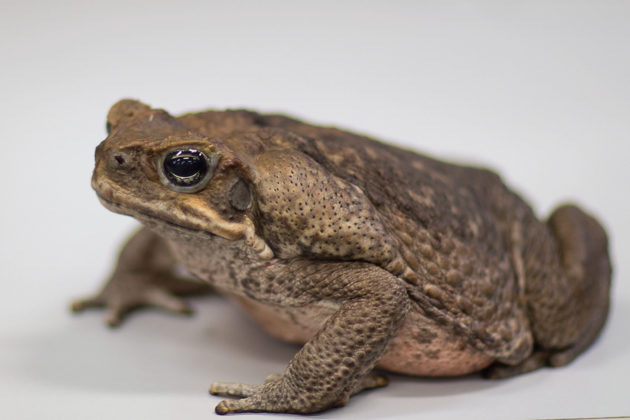

A large, warty toad with prominent, somewhat triangular poison glands behind the eyes, tapering toward the shoulders. Size alone is not reliable identification, particularly for young toads.
Regional concern: Florida, Hawaii, and southern Texas. In Florida, cane toads are especially associated with yards and other human-modified places near water.
Sonoran Desert toad
Colorado River toad · Incilius alvarius
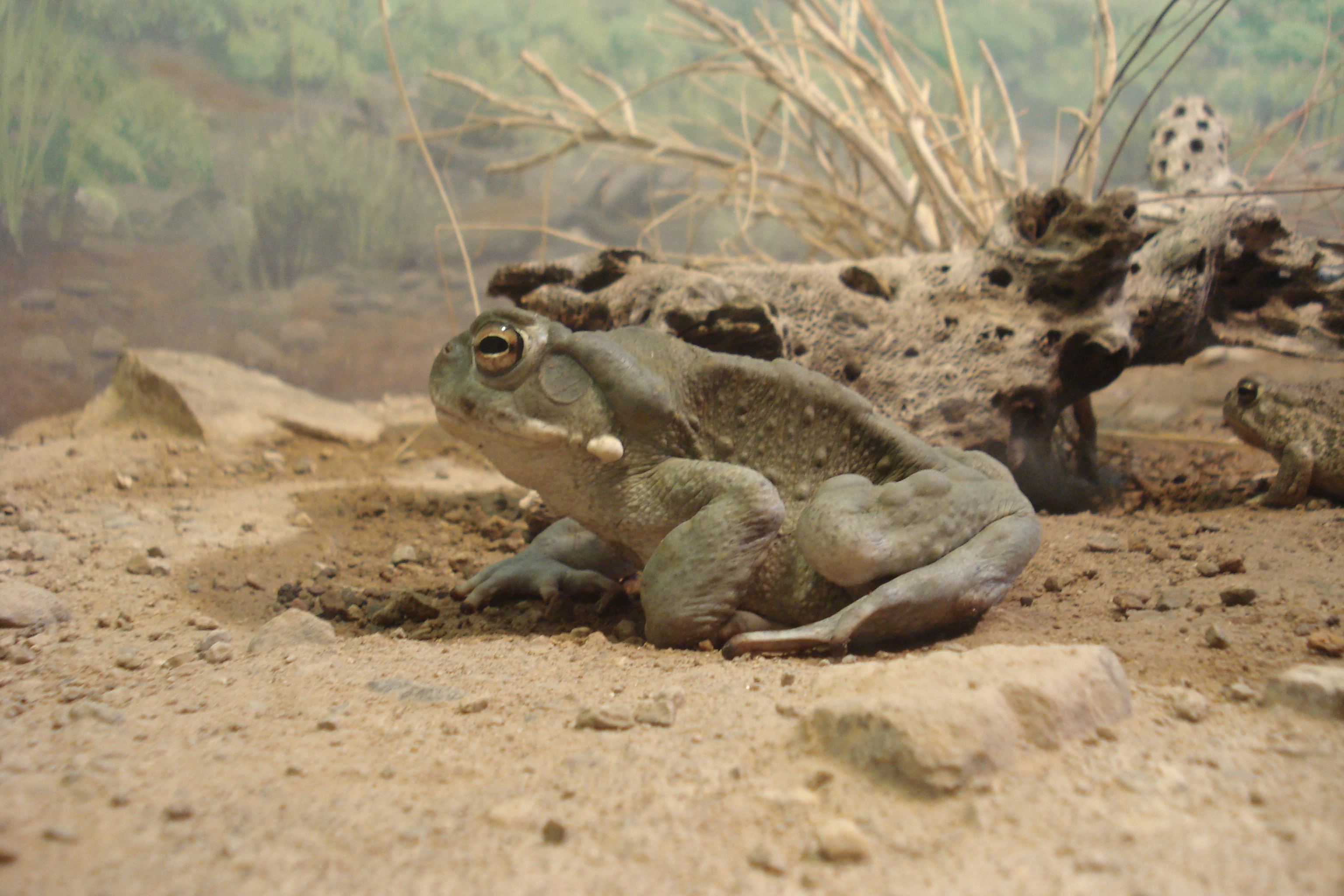

A large, olive-gray to brown toad with relatively smooth skin, prominent glands behind the eyes, and pale wartlike bumps near the corners of the mouth. Do not rely on color alone.
Regional concern: the southwestern U.S., especially Arizona, and northern Mexico. Summer monsoon rains increase encounters. The name “Colorado River toad” does not mean it is a common Colorado hazard; travel and local habitat matter.
How poisoning happens
Dogs can be exposed by licking, biting, or mouthing a toad. Defensive secretions contact the oral mucosa — the moist lining of the mouth — where toxins can be absorbed. A dog does not have to swallow the toad to be at risk.
Severity varies with species, amount of exposure, and the dog's health. Cane and Sonoran Desert toads can cause life-threatening heart and nervous-system effects.
Warning signs
- Sudden drooling or foaming, red gums, or pawing at the mouth
- Vomiting or retching
- Stumbling, weakness, or collapse
- Abnormal heart rhythms, which may not be visible to an owner
- Tremors or seizures
Do not wait for these signs after suspected high-risk toad contact.
What to do immediately
- Move your dog away from the toad without handling it. Call an emergency veterinarian immediately and arrange transport.
- Only if your dog is conscious and cooperative, gently wipe the gums and tongue with a damp cloth to remove secretions while emergency care is being arranged. Never delay departure for cleaning.
- Do not force water down the throat or induce vomiting. Do not attempt oral cleaning if your dog is unconscious, seizing, or unable to cooperate; keep hands and objects out of the mouth.
- Tell the veterinarian where contact occurred, when it happened, and any signs you noticed. Veterinary assessment and treatment are still needed even if the mouth looks cleaner.
This limited first-aid guidance is based on FWC/UF IFAS toxin-removal advice and Merck's aspiration and vomiting cautions. It is not a substitute for emergency veterinary care.
Reduce encounters
- Supervise dogs and use a leash at night in affected regions.
- Check yards and outdoor areas before letting your dog explore.
- Do not leave pet food or water bowls outside where they may attract toads.
- Avoid handling toads and keep dogs from investigating them.
- Check local wildlife guidance when traveling, especially during rainy seasons.
Prevention means separating pets from wildlife, not harming toads.
Weather, habitat & travel
Warm or mild nights and moist conditions can increase encounters. Cane toads often occur near water and breed after heavy rain; in Arizona, Sonoran Desert toads emerge during summer monsoons.
Weather is not proof that an area is safe. Be alert around yards, ponds, and temporary pools in affected regions. These are regional and travel-related concerns, not a claim that these species are common around Colorado homes.
Veterinary & regional references
Educational information, not a diagnosis or a claim of veterinary review. Contact a veterinarian for any suspected exposure.